
In today’s fast-paced digital world, businesses are up against a growing list of IT challenges. Cybersecurity threats are getting more sophisticated, compliance requirements are piling up, and having a seamless IT strategy is more crucial than ever. For many companies, expecting one in-house IT person to handle everything—support, cybersecurity, compliance, business continuity, and strategy—is just not realistic.
That’s where a co-managed model with a Managed Security Services Provider (MSSP) comes in. It lets businesses keep their in-house IT staff for specific needs while tapping into the expertise and resources of an MSSP for broader IT and security functions. Here’s why this model is invaluable and why no single IT professional can cover all aspects of modern IT management.
If you are comparing operating models instead of just reading the concept, use our co-managed IT services page for the shared-ownership model, our managed IT services page for the fully outsourced model, our managed IT services Toronto page if you are based in the GTA, and our IT assessment page for a scoped recommendation.
The Limits of a Single IT Role
It’s easy to think that hiring one IT generalist can cover all your tech needs. But modern IT is too vast and complex for one person to manage effectively. Here’s why:
1. IT Support: The Everyday Battle
End-user support is a full-time job. Employees need help with device issues, software troubleshooting, and network problems. A single IT professional focused on this will struggle to find time for proactive improvements, security, or strategic initiatives.
2. Cybersecurity: A High-Stakes Game
Cyber threats are constantly evolving. Managing firewalls, endpoint security, intrusion detection, and ongoing threat monitoring requires a dedicated team. One IT professional can’t provide 24/7 security monitoring, handle incident response, and keep up with the latest threats. This is why businesses rely on MSSPs, which have specialized cybersecurity teams and advanced security operations centers (SOCs) to provide continuous protection.
3. Compliance: Navigating the Regulatory Maze
Businesses today must adhere to strict compliance regulations like HIPAA, GDPR, PCI-DSS, and SOC 2. Compliance isn’t just about checking boxes—it requires continuous audits, documentation, and security enforcement. Expecting one IT resource to manage compliance while handling support and security is unrealistic. MSSPs specialize in compliance, ensuring that businesses remain audit-ready and avoid costly penalties.
4. Business Continuity: Planning for the Unexpected
IT professionals must ensure business continuity and disaster recovery (BC/DR) plans are in place. This means maintaining backups, running tests, and preparing for ransomware attacks or natural disasters. A co-managed MSSP model ensures that these critical areas aren’t overlooked due to day-to-day IT firefighting.
5. IT Strategy: Aligning Technology with Business Goals
Finally, businesses need an IT strategy that aligns with their goals. IT leaders must evaluate emerging technologies, optimize IT budgets, and ensure IT infrastructure can scale. One IT professional may not have the time or expertise to craft a long-term IT strategy while managing daily tasks. An MSSP can provide virtual CIO (vCIO) or strategic advisory services to fill this gap.
The Value of a Co-Managed MSSP Model
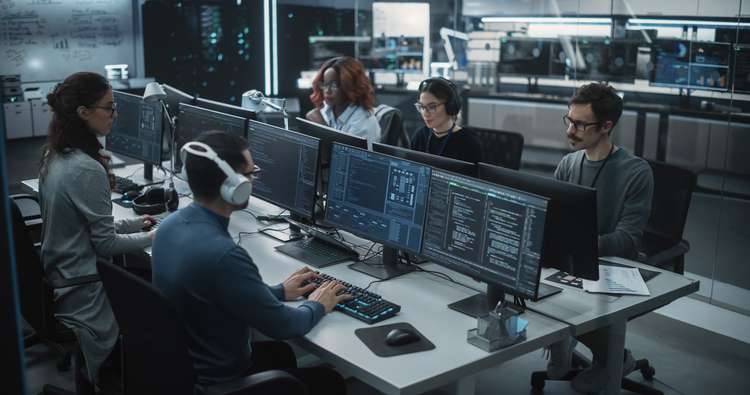
A co-managed IT approach allows businesses to retain in-house IT staff for specialized internal needs—like user support, application management, or onsite troubleshooting—while offloading high-value, complex, or time-sensitive tasks to an MSSP. Here’s what businesses gain:
1. Access to a Full IT Team for the Cost of One Employee
Hiring multiple in-house IT specialists for security, compliance, support, and strategy is costly. With an MSSP, businesses gain access to an entire team of experts, advanced security tools, and 24/7 monitoring—without the overhead of hiring a full department.
2. Proactive Security and Compliance
Rather than reacting to security incidents, an MSSP continuously monitors threats, applies patches, and ensures compliance frameworks are followed. This prevents costly breaches and compliance violations.
3. Reduced Downtime and Faster Response Times
An MSSP offers 24/7 IT support, remote monitoring, and disaster recovery services, reducing downtime and keeping businesses operational. In-house IT teams benefit from this partnership by having additional resources to handle complex issues.
4. Scalability and Future-Proofing
As businesses grow, their IT needs evolve. An MSSP provides the flexibility to scale IT services up or down as required, ensuring that businesses stay ahead of technological advancements.
5. Strategic IT Guidance
MSSPs draw from a vast pool of experience, and provide IT roadmaps and strategic consulting to help businesses align their technology investments with long-term goals. This ensures that IT remains a business enabler rather than just a cost center.
The Smart Choice for Modern IT
The idea that one IT professional can handle all aspects of support, security, compliance, business continuity, and strategy is outdated. The complexity and volume of IT tasks today demand a more collaborative, co-managed approach. By partnering with an MSSP, businesses can enhance security, streamline compliance, reduce downtime, and gain strategic IT direction—all while keeping internal IT focused on business-specific needs.
If your business is struggling to keep up with modern IT challenges, a co-managed MSSP model might be the solution you need. It’s time to stop expecting one person to do it all and start leveraging the power of an experienced IT team.
Related Resources
- Managed IT Support
- IT Business Assessment
- IT Support Cost for SMBs
- Break-Fix vs Managed
- Cybersecurity Services
- vCIO & vCISO
Fusion Computing serves Canadian businesses across:
Managed IT — Hamilton · Managed IT — Metro Vancouver
Concerned About Your Cybersecurity Posture?
Find out where your organization stands with a free cybersecurity assessment from our CISSP-certified team.
Frequently Asked Questions
What is a co-managed IT model?
A co-managed IT model combines an in-house IT person or team with services from a managed security service provider (MSSP). The in-house staff handle day-to-day needs and institutional knowledge, while the MSSP provides specialized expertise in areas like cybersecurity, compliance monitoring, and 24/7 threat detection. This model gives businesses the best of both worlds without the cost of a fully staffed internal IT department.
Why can’t one IT person cover all modern IT needs?
Modern IT is too broad and specialized for one generalist to manage effectively. End-user support alone can consume a full-time role. Add cybersecurity monitoring, compliance management, server administration, strategic planning, and vendor management, and you have a workload that requires a team with diverse expertise. Expecting one person to do all of this well leads to burnout and dangerous gaps in coverage.
What does an MSSP provide that a solo IT person can’t?
An MSSP brings a full team of specialists including security analysts, network engineers, compliance experts, and vCIOs, along with enterprise-grade monitoring tools, threat intelligence feeds, and 24/7 coverage. A solo IT professional, no matter how skilled, simply can’t replicate the depth of expertise, breadth of tooling, or continuous availability that a properly staffed MSSP delivers.
What types of businesses benefit most from a co-managed IT model?
Businesses with 20 to 200 employees that already have one or two in-house IT staff benefit most from co-managed IT. These companies have enough complexity to need specialized security and strategic support, but not enough volume to justify hiring a full in-house security team. Healthcare, professional services, and manufacturing businesses with compliance requirements are particularly well-suited to this model.
How does co-managed IT improve cybersecurity?
An MSSP partner brings dedicated security monitoring, threat detection tools, and incident response capabilities that most in-house IT teams lack. They can manage firewalls, intrusion detection systems, endpoint security, and security awareness training as specialized functions rather than secondary duties. This significantly reduces the risk of a breach going undetected because no one was watching for it.
How is co-managed IT priced?
Co-managed IT is typically priced as a monthly per-user or flat fee that covers defined services like security monitoring, backup management, and strategic advisory. The in-house team handles tickets and hands-on work, while the MSSP provides the tools, monitoring, and expertise. Most businesses find the total cost of co-managed IT is lower than hiring enough in-house staff to cover the same scope.